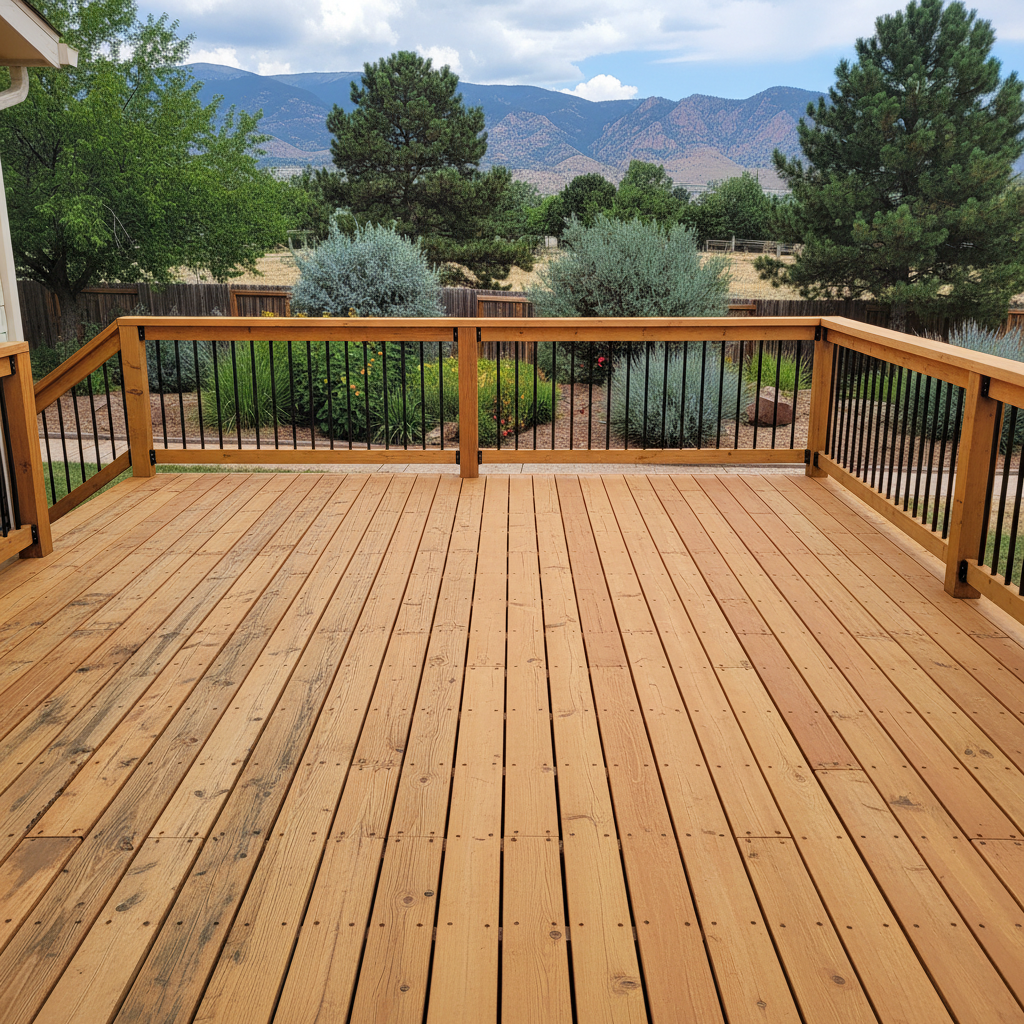
Your deck has seen better days. Every spring when you finally get outside to sweep off the winter grit in Park Hill or Washington Park, you notice a few more soft boards, a wobbly railing post, or boards that look like a roller coaster. Then you have to make the call: do you patch up the problem spots, or is it time to tear the whole thing down and start over?
Quantum Deck Solutions gets asked this question a couple times a week. Let us break down the two choices honestly, without any sales fluff.
The Real Deal with Spot Repairs
Spot repairing means replacing individual deck boards, sistering new joists next to rotting ones, and tightening up hardware. It is the cheaper upfront route, no doubt about it. If you have just a few localized soft spots—maybe from a planter box that trapped moisture or a bad run of boards that took the brunt of the afternoon sun—repairing makes sense.
However, you have to look underneath. Here in Denver, our weather swings from freezing winter snow to blazing summer heat put immense stress on wood and fasteners. If the framing is structurally sound and only the surface decking is weathered, a patch job buys you a few more years. But if you are chasing rot across half the frame, you are just throwing money at a sinking ship.
When Full Replacement Is the Only Smart Move
At some point, fixing old problems stops working. If your ledger board is pulling away from your house, or if the posts are rotting out at the concrete footings, patching is out of the question. Safety comes first.
A full replacement lets you fix drainage issues, upgrade to modern materials that handle our high-altitude UV rays better, and configure the space to actually fit how you live now. Quantum Deck Solutions often sees older Denver homes with decks that were built twenty or thirty years ago to entirely different code standards. Starting fresh means getting a solid, code-compliant foundation that will not keep you awake when the wind kicks up off the plains.
Comparing Cost, Maintenance, and Durability
Let us talk numbers and effort.
- Upfront Cost: Repairs cost a fraction of a new build. A few hundred to a couple thousand bucks versus a major investment for a complete tear-out and rebuild.
- Long-Term Maintenance: If you repair an old wooden deck, you still have to stain and seal it every couple of years. If you replace it, you can upgrade to capped composite materials that completely eliminate annual staining.
- Durability: Repairs only last as long as the surrounding old material. A new build gives you a clean slate with a multi-decade lifespan.
Making Your Final Call
Look closely at your deck skeleton. If the bones are good and you just need a cosmetic face-lift or a few boards swapped out, save your cash and go with repairs. But if you are constantly fixing something every season, or if you are worried about structural safety, bite the bullet and replace it. You will sleep better at night knowing your family and friends are standing on solid ground.