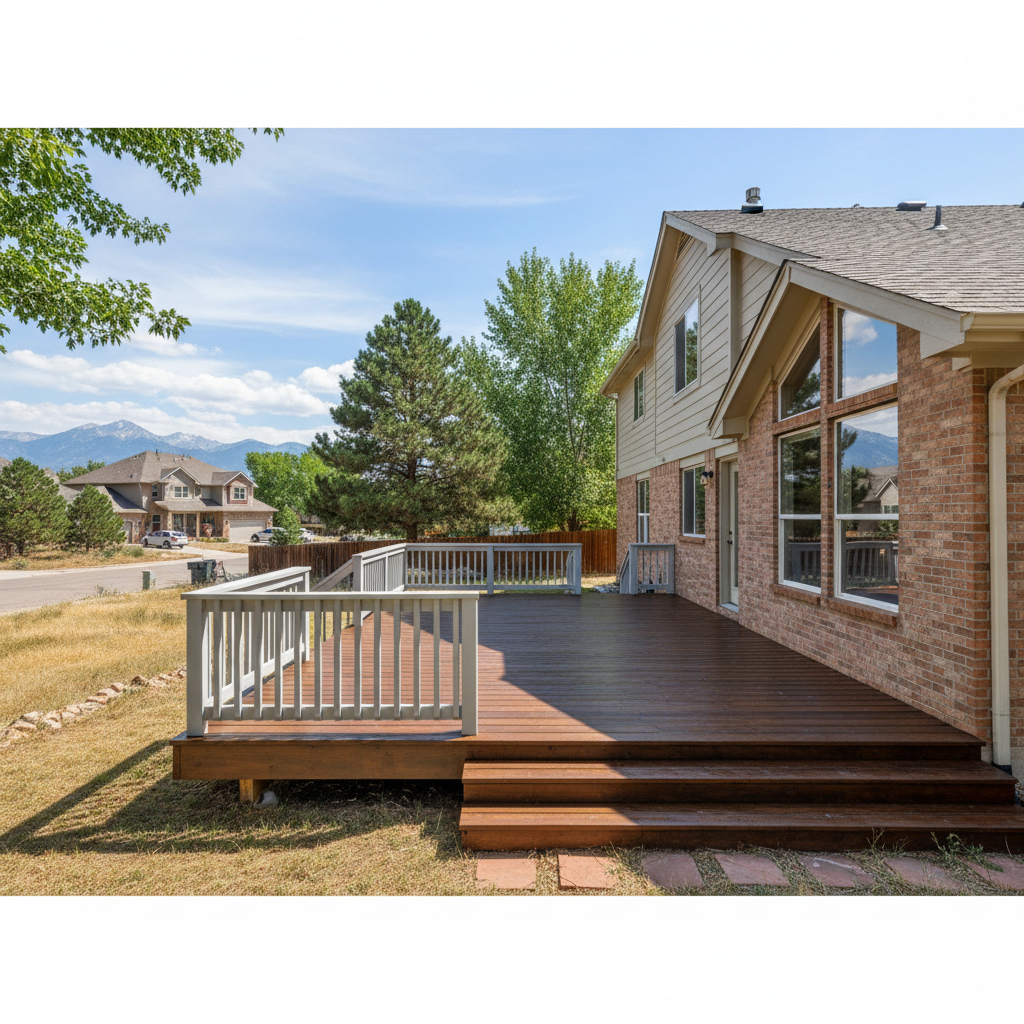
You've got a deck, and it's probably seen a few seasons. Maybe it's looking a little faded, or the wood's starting to gray out. You're thinking, "Time to paint or stain it," right? Well, hold on a second. In Denver, it's not quite as simple as grabbing a can off the shelf and going to town. Our unique climate and conditions mean you need to be smart about how you protect your outdoor living space.
Why Denver Decks Need Special Treatment
Look, anyone can slap some paint on wood. But for a deck in Denver, especially one that gets hammered by our intense UV rays and those wild temperature swings, that's just a waste of time and money if you don't do it right. We're not talking about a deck in a humid, mild climate. Here, your deck is battling high altitude sunshine that's brutal on wood, dry air that can cause cracking, and then you've got snow and ice in the winter. It's a tough life for a deck.
I've seen countless decks in places like Stapleton or Highlands Ranch, where homeowners have tried a quick fix, only for it to peel or fade within a year or two. That's because they didn't consider the specific challenges. The sun here isn't just bright; it's actively trying to break down the lignin in your wood, turning it gray and brittle. And that dry air? It sucks the moisture right out, leading to checks and cracks if the wood isn't properly sealed and protected.
Stain vs. Paint: The Denver Showdown
This is probably the biggest question I get. Should you stain it or paint it? My answer usually starts with another question: what kind of look do you want, and how much maintenance are you willing to do?
- Deck Stains: Most of the time, for a wooden deck, I'm going to lean towards a good quality stain. Why? Stains penetrate the wood, offering protection from the inside out, while still allowing the natural grain to show through. There are different types: clear, semi-transparent, semi-solid, and solid. Clear and semi-transparent stains are fantastic if you love the look of natural wood. They offer UV protection and water repellency, but they'll need reapplication more frequently, maybe every 2-3 years depending on exposure. Semi-solid and solid stains offer more pigment, which means better UV protection and longer life, often 3-5 years. They still let some of the wood texture show, unlike paint.
- Deck Paints: Paint sits on top of the wood, forming a solid, opaque layer. This gives you a uniform color and can hide imperfections in older wood. The downside? Paint is more prone to peeling and chipping, especially on a horizontal surface like a deck that gets foot traffic, furniture dragged across it, and direct sun and snow. Once paint starts to peel, it's a real headache to fix. You're looking at a lot of scraping and sanding to get it right again. If you're dead set on a solid color, a high-quality solid stain is almost always a better choice than traditional deck paint here in Denver. It penetrates better and holds up to our conditions with less peeling.
Prep Work: Don't Skip This Step!
I can't stress this enough: the success of your deck staining or painting project is 90% in the prep work. You can buy the most expensive, best-performing product on the market, but if you put it on a dirty, poorly prepped surface, it's going to fail. Guaranteed.
Here's what good prep looks like:
- Clean it: You need to get rid of all the dirt, grime, mildew, and old, loose finish. A good deck cleaner and a power washer (used carefully!) are essential. Let it dry completely.
- Sand it: Light sanding opens up the wood grain, allowing the stain to penetrate better and giving you a smoother finish. Don't skip this, especially if you're going from an old finish to a new one.
- Repair it: Replace any rotten boards, tighten loose screws, and hammer down popped nails. You want a solid foundation.
This isn't just about making it look good; it's about making the finish last. If you're staining over an old, failing stain, it's going to fail again, probably faster.
Why Local Expertise Matters
You might think, "It's just a deck, how hard can it be?" But when you're dealing with a significant investment like your outdoor living space, especially in a place like Denver, you want someone who understands the local nuances. I've been working on decks all over this city for years, from the older homes in Congress Park with their classic redwood decks to the newer builds in RiNo with pressure-treated pine. I know what products hold up best against our harsh sun and dry winters.
At Quantum Deck Solutions, we're not just applying a product; we're applying knowledge gained from years of experience right here in your backyard. We know which stains perform well on different wood types under our specific climate conditions. We understand the importance of proper application techniques that will maximize the life of your finish, saving you money and headaches down the road.
Don't just guess when it comes to protecting your deck. Get it done right the first time, and enjoy your outdoor space for many seasons to come.