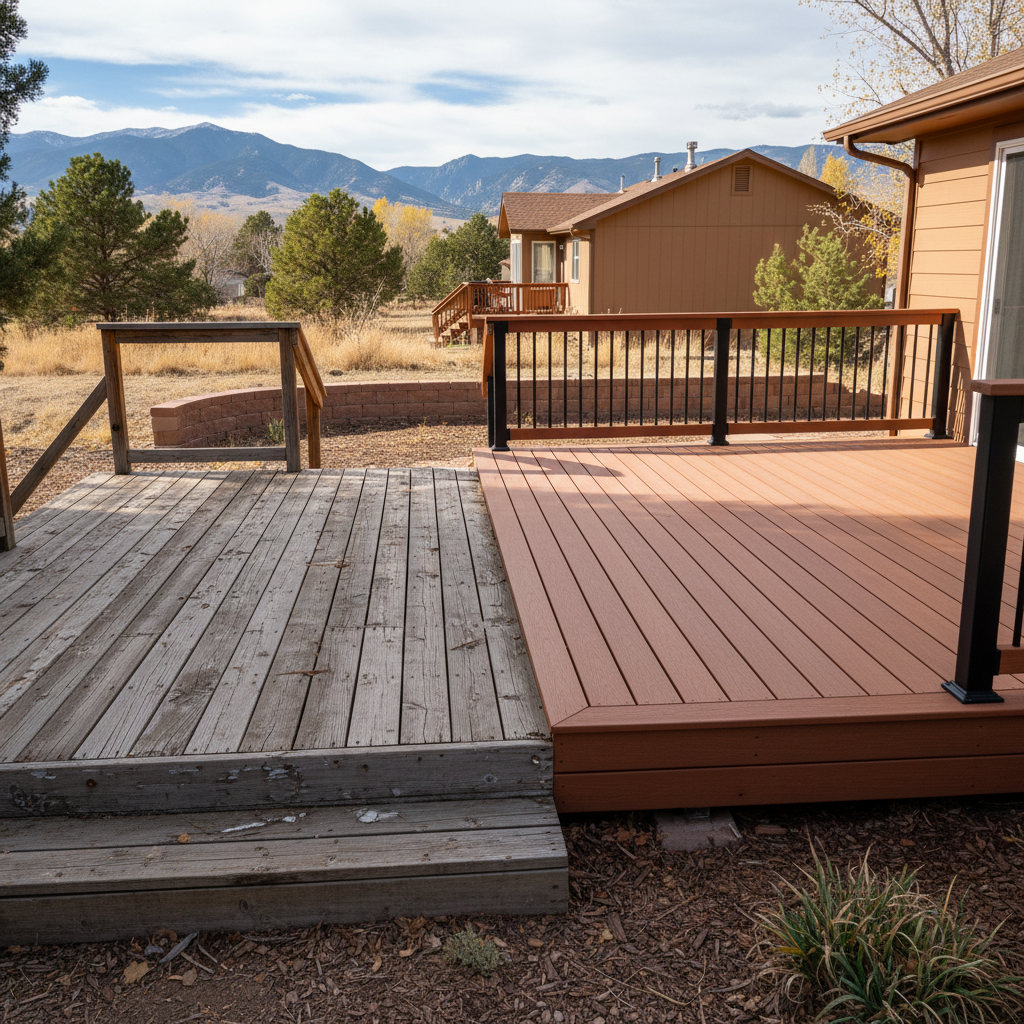
Your deck's looking a little rough, huh? Maybe a few rotten boards, some wobbly railings, or just that general feeling of 'not quite right.' When you're staring at those issues, the big question pops up: do I patch up the bad spots, or do I bite the bullet and replace the whole deck?
It's a common dilemma for homeowners here in Denver, especially with our crazy weather. One minute it's baking sun, the next it's a foot of snow, then hail the size of golf balls. That kind of abuse takes its toll. As someone who's been building and fixing decks for years with Quantum Deck Solutions, I've seen both sides of this coin, and I can tell you, there's a right time for each approach.
Patching Up: The Spot Repair Approach
This is usually the first thing folks think about. 'Can't I just replace these three rotten boards?' And sometimes, yeah, you absolutely can. Spot repair means you're targeting specific, localized damage without touching the rest of the structure.
Cost & Time
Let's be real, this is often the cheapest option upfront. You're buying less material – maybe a few deck boards, some new balusters, or a section of railing. Labor costs are lower too because it's a smaller job. It's quicker, so you'll have your outdoor space back in action faster. If you've got a tight budget or a specific event coming up, patching can be very appealing.
Durability & Longevity
Here's where it gets tricky. If the damage is truly isolated – say, one board got hit by a falling branch, or a few balusters cracked because of an impact – then a spot repair can be quite durable. You're essentially bringing that small section back to par with the rest of the deck. However, if that 'isolated' damage is actually a symptom of a larger problem, like widespread rot due to poor drainage or an aging structure, then your patch might not last long. You're putting a new band-aid on an old wound, and that wound might just open up somewhere else soon.
Maintenance & Appearance
Maintenance for a patched deck means you'll still be maintaining the older sections as well as the new. The biggest challenge here is appearance. Matching new wood to old, weathered wood is tough. Even if you use the same species and stain, the new material will look... new. It'll stand out. Over time, it'll weather and blend in more, but initially, it can look a bit mismatched. If you're going from wood to composite for a few boards, it's even more noticeable. For some folks, that's not a big deal; for others, it's a major eyesore.
Full Replacement: The Start-Fresh Approach
This is exactly what it sounds like: tearing down the old deck and building a brand new one from scratch. It's a bigger commitment, but it often solves a lot more problems.
Cost & Time
No sugar-coating it, a full replacement is a significant investment. You're paying for demolition, all new materials, and more extensive labor. It takes longer too, so you'll be without your deck for a more extended period. However, think of it as an investment in your home's value and your long-term enjoyment. You're getting a brand-new structure designed to last for decades.
Durability & Longevity
This is where full replacement shines. You're getting a completely new foundation, new joists, new decking, new railings – everything. You can choose modern, durable materials like composite decking that are engineered to withstand Denver's intense UV rays and freeze-thaw cycles. You can also address any underlying issues, like proper flashing against the house or better ventilation underneath, which are crucial for longevity in our climate, especially in areas like Stapleton where homes are often built close together on smaller lots. A new deck, properly built, should give you 20-30 years or more of worry-free enjoyment.
Maintenance & Appearance
With a full replacement, you get a perfectly uniform, fresh look. Everything matches, everything's new. You can choose current styles, colors, and materials that perfectly complement your home. Maintenance is often significantly reduced, especially if you opt for low-maintenance materials like composite or PVC. No more trying to blend old and new; it's all cohesive and beautiful.
My Recommendation for Denver Homeowners
So, which one's right for you? Here's my take:
Go for spot repair if: The damage is truly minimal, isolated, and the rest of your deck is in excellent structural shape. We're talking a few cracked boards, a loose railing post that's easily re-secured, or some surface-level issues. If the deck is less than 10-15 years old and mostly sound, patching can make sense.
Seriously consider full replacement if: Your deck is showing widespread signs of rot, significant structural issues (like bouncy joists or leaning posts), or if it's just plain old (over 20 years for wood decks, often less if not well-maintained). If you're constantly finding new problems, or if the cost of patching starts to add up to a significant percentage of a new deck, it's time to replace. You'll get better long-term value, superior safety, and a deck that genuinely enhances your home and lifestyle.
Ultimately, it comes down to what you want out of your outdoor space and what kind of budget you're working with. But don't just look at the immediate cost; think about the long haul. Sometimes, spending a bit more upfront saves you a lot of headaches and money down the line. Give us a call at Quantum Deck Solutions, and we can come out, take a look, and give you an honest assessment of what your deck really needs.