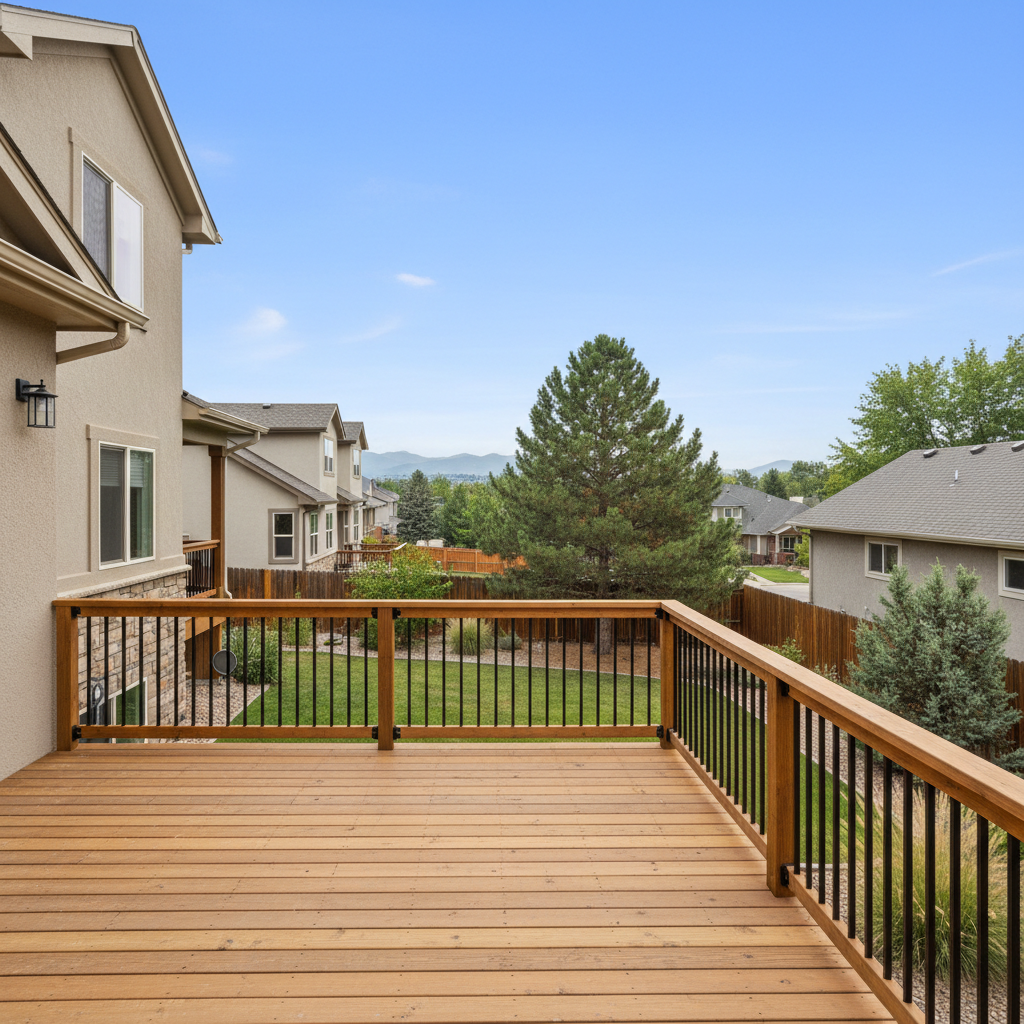
Your deck railing takes a beating in Colorado. Between the intense UV radiation at a mile high, sudden freeze-thaw cycles that heave posts, and heavy wet spring snowstorms that pile up against balusters, flimsy materials just do not last here. When we work on homes from the historic bungalows in Park Hill to newer builds out in Stapleton, homeowners often ask us about upgrading their railings for better safety, views, and durability.
Understanding Denver Building Codes for Deck Railings
Building departments across the Denver metro area are strict about safety, and for good reason. If your deck surface sits more than 30 inches above the ground, local codes require a guardrail that stands at least 36 inches high. That rule catches a lot of DIYers off guard. In addition, the spacing between your vertical balusters cannot exceed four inches, ensuring a small sphere cannot pass through. Quantum Deck Solutions makes sure every post anchor and structural attachment ties directly into the framing to handle a 200-pound concentrated load requirement without wobbling.
Choosing the Right Material for Front Range Weather
Wood railings look classic, but untreated pine or standard cedar will warp, crack, and require constant staining under our relentless sun. If you want a clean look with minimal maintenance, aluminum and composite systems are the way to go. Aluminum will not rust, holds up against heavy snow loads, and keeps your sightlines open to the mountains. Composite sleeves over structural wood or steel posts offer a solid middle ground, matching your decking boards while providing rock-solid stability.
- Aluminum balusters resist fading and high-altitude UV damage.
- Composite systems match your existing deck boards cleanly.
- Proper post mounting prevents long-term looseness from wind and foot traffic.
Getting your railing installation right means balancing local safety regulations with materials that actually survive our unique climate. Take a close look at your current setup, check for any loose posts or splintering top caps, and build something that stays sturdy for 15 to 20 years or more.