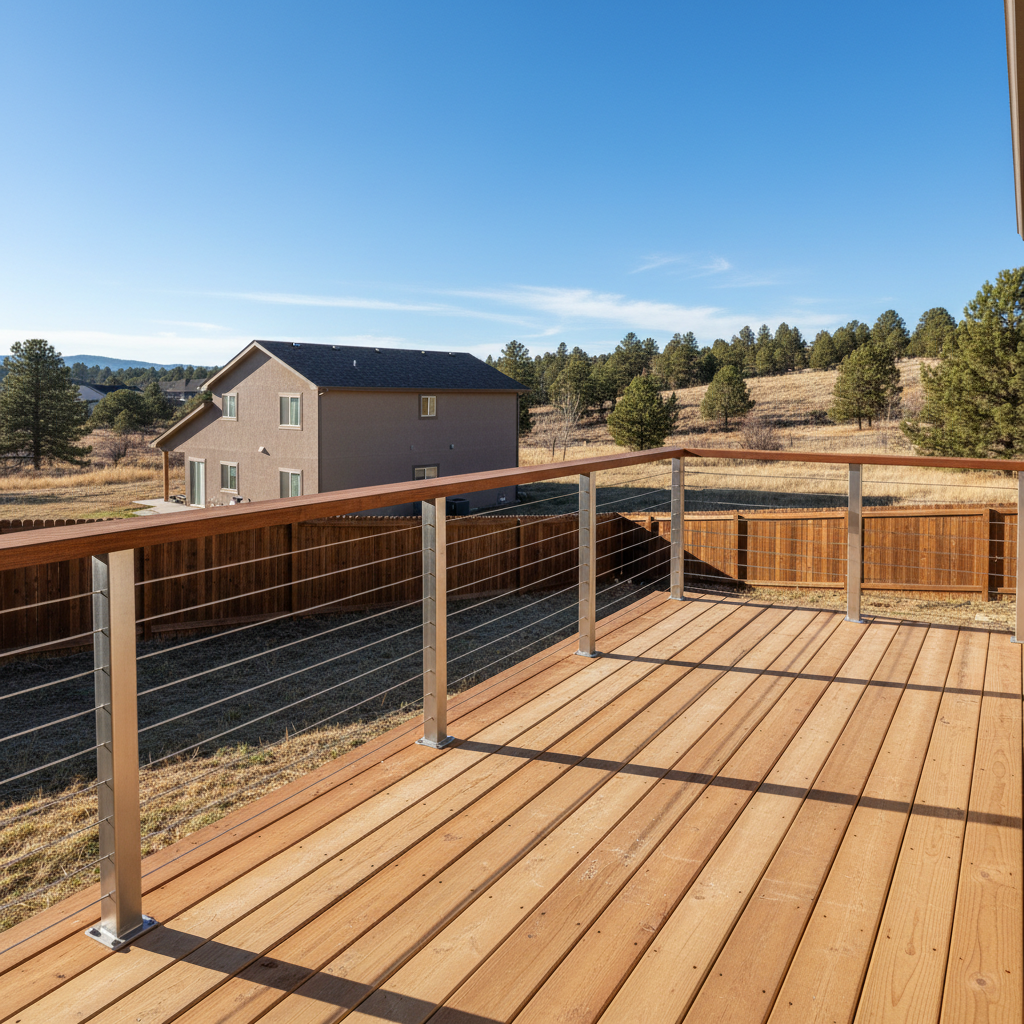
Alright, let's talk deck railings. You've got a deck, maybe it's new, maybe it's old and those railings are looking a bit sad, or worse, unsafe. You know you need to do something, but what's it going to cost you here in Denver? That's the million-dollar question, and I'm going to give you some straight answers, not just a vague 'it depends.'
What Really Drives the Price of Deck Railings?
When you're getting quotes, you'll see a pretty wide range, and that's usually because of a few key things. It's not just about the length of your deck, though that's obviously a big factor.
- Material Choice: This is probably the biggest one. Wood, composite, aluminum, steel, glass — they all have vastly different price points. A basic pressure-treated wood railing is going to be your cheapest option, while a sleek glass panel system or custom steel will be at the top end.
- Style and Complexity: A simple vertical picket railing is less labor-intensive than, say, a horizontal cable railing system or something with intricate balusters. Curved sections, custom angles, or integrating lighting also add to the complexity and, therefore, the cost.
- Deck Structure: Is your existing deck sturdy enough to support the new railing? Sometimes, especially with older decks or if you're upgrading to a heavier material like glass, we might need to reinforce the rim joist or posts. That's an extra cost you need to factor in.
- Permitting: Yep, in Denver, most railing replacements or new installations require a permit, especially if you're changing the height or type. Don't skip this; it's for your safety and avoids headaches down the line. The cost of the permit itself isn't huge, but the time and paperwork involved get rolled into the project.
- Site Accessibility: Can we easily get materials to your backyard? If we're hauling heavy steel panels up three flights of stairs in a tight Capitol Hill alley, that's going to take more time and effort than working on a ground-level deck with wide-open access in Highlands Ranch.
Typical Cost Ranges in Denver (Per Linear Foot)
Okay, let's get down to some numbers. Keep in mind these are averages I've seen around town, and they include materials and installation. Your specific project might be a bit higher or lower.
- Pressure-Treated Wood: This is your most budget-friendly option. You're looking at roughly $35 - $60 per linear foot. It's sturdy, but it needs regular maintenance like staining or painting.
- Composite/PVC: A step up in durability and less maintenance. These typically run between $60 - $95 per linear foot. Brands like Trex or Azek are popular choices here.
- Aluminum: Super durable, low maintenance, and comes in various styles and colors. Aluminum railings usually fall in the $70 - $120 per linear foot range. It's a great middle-ground option.
- Cable Railing (Stainless Steel): Modern, sleek, and offers unobstructed views. This is a premium option, usually costing anywhere from $110 - $200+ per linear foot, depending on the post material and cable quality.
- Glass Panel Railing: The ultimate for views and a contemporary look. This is the most expensive, often starting around $150 and going up to $300+ per linear foot, especially for custom tempered glass.
So, if you've got a 10x20 foot deck, that's 50 linear feet of railing (assuming one side is against the house). A basic wood railing might be $1,750 to $3,000, while a glass system could easily hit $7,500 to $15,000 or more. Big difference, right?
What Should a Good Quote Include?
When Quantum Deck Solutions gives you a quote, or any reputable contractor for that matter, you should expect to see a clear breakdown. Don't just accept a single number.
- Detailed Material List: What type of posts, balusters, top rail, and fasteners are they using? Specific brands and models are a good sign.
- Labor Costs: How many hours or days do they estimate for installation?
- Permit Fees: Who's responsible for pulling the permit, and what's the estimated cost?
- Demolition & Disposal: If we're tearing out old railings, is that included? Where do the old materials go?
- Site Preparation & Cleanup: This should always be part of the job.
- Warranty Information: What kind of warranty do they offer on their workmanship? What about the material manufacturers' warranties?
- Payment Schedule: A clear breakdown of deposits, progress payments, and final payment.
How to Avoid Overpaying for Your Denver Deck Railings
Nobody wants to get ripped off. Here's what I tell folks:
- Get Multiple Bids: Don't just call one guy. Get at least three detailed quotes. This helps you compare not just price, but also the scope of work and materials.
- Ask for References: A good contractor will happily provide them. Call those references and ask about their experience.
- Check Licenses & Insurance: Make sure they're properly licensed with the City and County of Denver and carry general liability insurance. You don't want to be on the hook if something goes wrong.
- Don't Always Go for the Absolute Cheapest: There's a reason some bids are super low. It usually means cutting corners on materials, labor, or not carrying proper insurance. Quality work isn't cheap, and cheap work isn't quality.
- Understand the Contract: Read every line before you sign. If you have questions, ask. Don't be afraid to push back if something doesn't look right.
Your deck railing isn't just about looks; it's a critical safety feature. Investing in good quality and professional installation is worth it. It protects your family, enhances your home's value, and lets you enjoy those beautiful Colorado sunsets without worry.