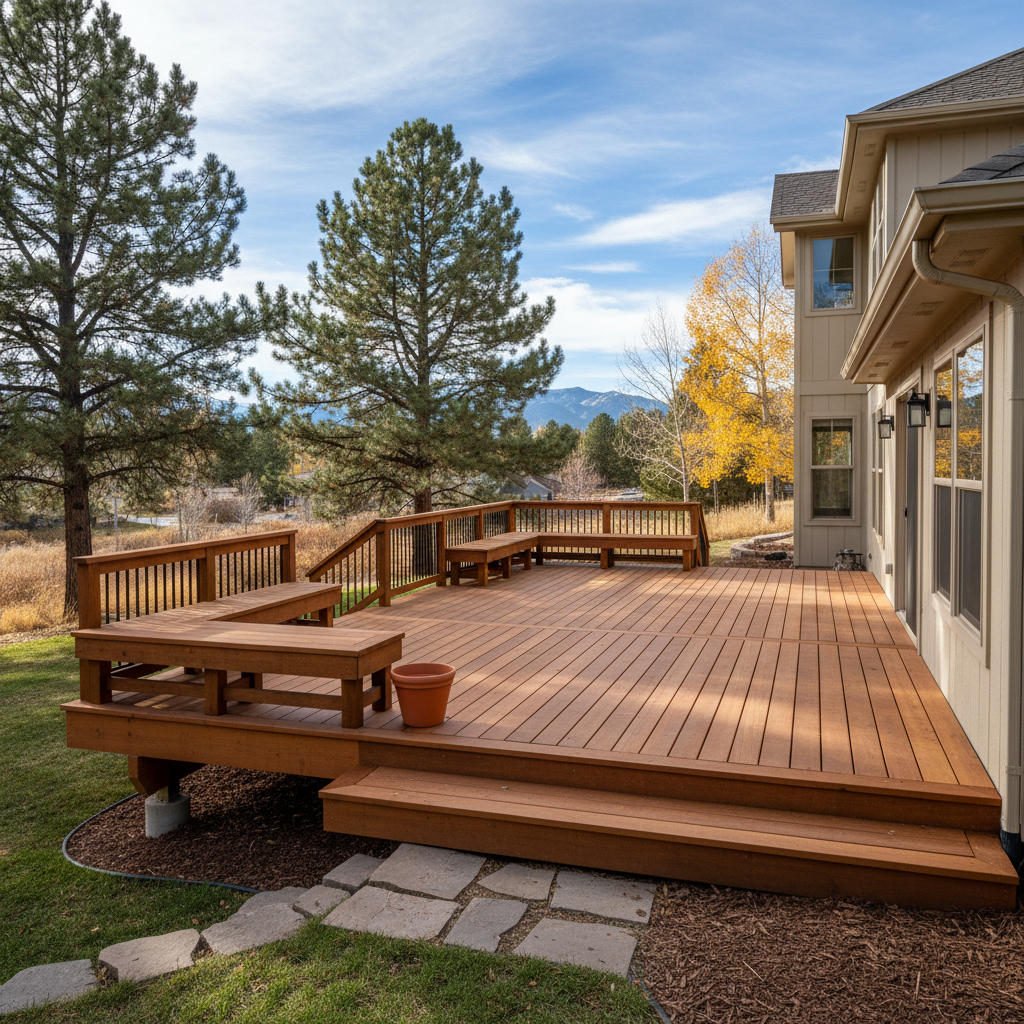
So, you've got a wooden deck here in Denver, or you're thinking about building one. That's awesome. A good deck adds so much to your home, especially with our 300 days of sunshine. But let's be real, our climate isn't exactly kind to wood. Between the intense sun, dry air, and those sudden snowstorms, your deck takes a beating. I've seen it all in my years building and repairing decks around places like Washington Park and Highlands Ranch.
When's the Best Time to Build or Repair a Wooden Deck?
People always ask me, "When's the best time to get this done?" My answer usually surprises them a little. Most folks think spring or summer, right? While those are fine, they're also our busiest times. You'll often wait longer for materials and for a crew to get started. Plus, the summer sun can be brutal on freshly installed wood, causing it to dry out too quickly before it's properly sealed.
Honestly, late fall or early spring can be golden. In late fall, after the leaves drop but before the really heavy snows hit, you often get a stretch of clear, crisp days. The ground's usually dry, and the wood has a chance to acclimate to our dry air without getting baked by 90-degree heat or soaked by spring rains. Early spring, once the snow melts and the ground dries up, is also great. We're not fighting the summer rush, and the temperatures are usually perfect for working with wood and applying finishes.
What you really want to avoid is building when the ground is super saturated from a big snowmelt or a string of heavy rains. Digging footings in mud is a nightmare, and it's not good for the long-term stability of your posts. Also, trying to stain or seal wood when it's too cold or too humid? Forget about it. The finish won't cure right, and you'll be redoing it sooner than you think.
Denver Weather and Your Wooden Deck
Our weather here is a unique beast. It's not just the amount of sun; it's the intensity at our altitude. That high UV index is a killer for wood. It breaks down the lignin in the wood, causing it to gray and splinter if it's not protected. Then you've got the dry air, which can cause wood to crack and check. And don't even get me started on the freeze-thaw cycles we get. A warm sunny day melts the snow, then it freezes solid overnight. That expansion and contraction is tough on fasteners and can warp boards.
Here's what I've seen:
- UV Damage: This is probably the biggest culprit for unprotected decks. That constant, intense sun just bakes the life out of the wood. It'll fade your stain, dry out the fibers, and lead to splintering.
- Moisture Swings: One day it's bone dry, the next we get a foot of snow. This constant change makes wood expand and contract, which loosens screws, warps boards, and can lead to structural issues over time if not properly maintained.
- Hail: We get some nasty hailstorms here. While wood is pretty resilient, a really big hailstorm can dent and chip the surface, especially if it's an older, softer wood.
- Snow Load: While most decks are built to handle our typical snow loads, especially with our dry, fluffy snow, a really heavy, wet snow can put a lot of stress on the structure. It's usually not a problem for a properly built deck, but it's something to be aware of.
Protecting Your Deck Investment Year-Round
This is where the rubber meets the road. You've invested good money in your deck, so let's keep it looking good and lasting for decades. It's not just about aesthetics; it's about structural integrity and safety.
First off, cleaning is crucial. You'd be surprised how much dirt, pollen, and grime accumulates. I recommend a good cleaning every spring. You can use a deck cleaner designed for wood, or even just a mild detergent and a brush. Don't go crazy with a pressure washer unless you know what you're doing; you can easily damage the wood fibers.
Next, and this is probably the most important thing for wooden decks in Denver: stain and seal, and do it regularly. For our climate, I usually recommend a high-quality oil-based stain with good UV inhibitors. It penetrates the wood better and offers more protection against the sun and moisture. How often? It depends on the product and how much sun your deck gets, but every 2-3 years is a good rule of thumb for most decks. If you notice the water isn't beading up anymore, it's time.
When you're staining, make sure the deck is completely dry. I'm talking a few days of dry weather. If you stain over damp wood, you're just trapping moisture, which leads to mildew and peeling. Also, pick a day that's not too hot or too windy. You want the stain to soak in, not dry on the surface too quickly.
Inspect your deck annually. This is something you can do yourself. Look for loose railings, wobbly steps, popped nails or screws, and any signs of rot or insect damage. Pay close attention to the ledger board where the deck attaches to your house – that's a common spot for issues if it wasn't flashed properly. If you see anything concerning, give a professional a call. It's always cheaper to fix a small problem than a big one.
Finally, trim back foliage. Keep trees and bushes from growing directly onto or over your deck. They hold moisture, create shade that can encourage mildew, and drop leaves and debris that can trap moisture. Good airflow around and under your deck is key to keeping it dry and healthy.
Taking these steps might seem like a bit of work, but it's nothing compared to having to replace your entire deck prematurely. Here at Quantum Deck Solutions, we're all about building things right the first time, and helping you keep them that way. Your deck is an extension of your home, and with a little care, it'll serve you well for many years to come.